Ransomware Costs Extend Far Beyond the Ransom, BCDR Strategies Key to Reducing Financial Blow
Datto analysis underscores that downtime, recovery, and legal obligations can add millions to the bill, making business continuity and disaster recovery planning critical.
Key Takeaways
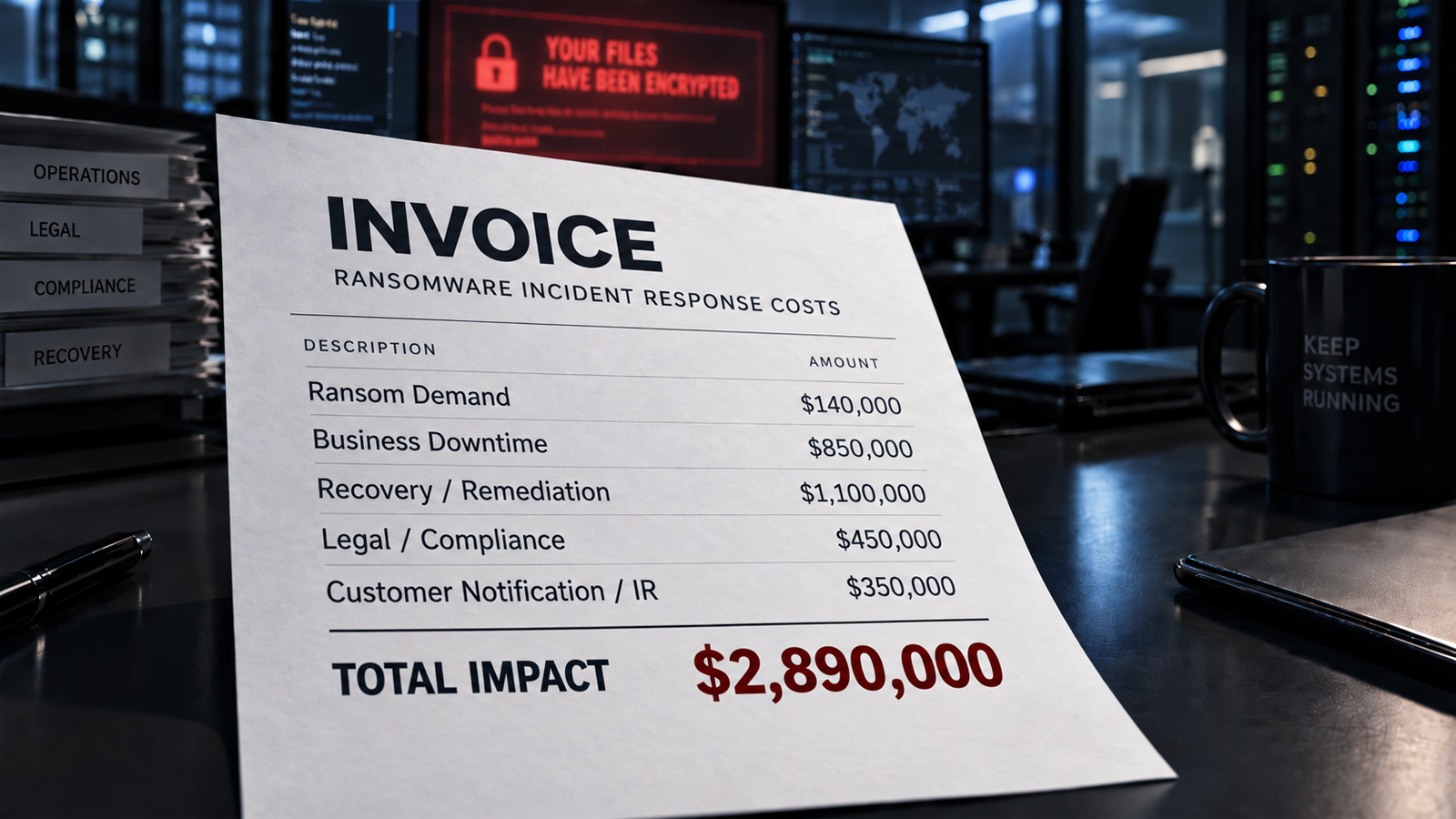
- Ransom payments are often only a small part of the total cost of a ransomware attack, with downtime, recovery, and legal fees adding millions.
- A mature BCDR strategy can reduce downtime and provide a faster, more predictable recovery path, lowering overall financial impact.
- Organizations should prioritize proactive preparedness, including regular backups and tested recovery procedures, to mitigate ransomware risks.
Quick answers
- What happened?
- A new analysis from Datto, published by BleepingComputer, highlights that the ransom payment is often only a small fraction of the total cost of a ransomware attack. Downtime, recovery efforts, remediation, and legal obligations can add millions to the financial impact. The article emphasizes that a mature business continuity and disaster recovery (BCDR) strategy can significantly reduce downtime and provide a faster, more predictable recovery path, thereby lowering the overall cost.
- What should defenders do?
- Organizations should implement and maintain a mature BCDR strategy, including regular backups, offsite storage, and tested recovery procedures. This enables faster restoration and reduces downtime, potentially avoiding ransom payments and lowering overall costs.
A ransomware attack's true cost extends far beyond the ransom itself, according to a new analysis from Datto, a provider of business continuity and disaster recovery solutions. The report, published by BleepingComputer on September 16, 2026, underscores that downtime, recovery, remediation, and legal obligations can add millions to the total bill, making a robust BCDR strategy essential for organizations.
The analysis points out that while the ransom demand is often the headline number, it is frequently only a fraction of the overall financial impact. Organizations face costs from operational downtime, which can halt revenue generation and productivity, as well as expenses related to forensic investigations, system restoration, and potential legal fees or regulatory fines. Reputational damage can also lead to long-term financial consequences.
Datto argues that a mature BCDR strategy can mitigate these costs by enabling faster recovery and reducing downtime. With a well-designed plan, organizations can restore systems from clean backups, minimizing the need to pay ransoms and shortening the disruption window. The article emphasizes that a predictable recovery path is crucial for business continuity.
The report does not cite specific incidents, statistics, or case studies, and no CVEs or patches are mentioned. The recommendations focus on proactive preparedness rather than reactive measures. Organizations are urged to assess their BCDR capabilities, ensure regular backups, and test recovery procedures to ensure they can respond effectively to a ransomware event.
While the analysis is vendor-sponsored and may present a biased perspective, the underlying message aligns with industry best practices: investing in resilience can significantly reduce the financial and operational impact of ransomware attacks.
Security Details
The article provides a general analysis of ransomware financial impact, emphasizing that ransom payments are only a fraction of total costs. It highlights downtime, recovery, remediation, and legal obligations as major contributors. No specific attack, CVE, or vulnerability is discussed. The recommendations focus on BCDR preparedness.
Mitigation
Organizations should implement and maintain a mature BCDR strategy, including regular backups, offsite storage, and tested recovery procedures. This enables faster restoration and reduces downtime, potentially avoiding ransom payments and lowering overall costs.
Sources
BleepingComputer
The true cost of a ransomware attack, with and without BCDR
Sep 16, 2026 · 14:00
Original link
Related Security News

Bitget Reports $388M Loss Following Exploitation of Third-Party Security Product Flaw
Bitget disclosed that an attacker stole approximately $388 million by exploiting a vulnerability in a third-party security product integrated into the exchange's infrastructure. The threat actor used the flaw to obtain high-level internal credentials, which were subsequently used on September 24 to issue fraudulent withdrawal commands to Bitget's wallet system. The exchange confirmed that most user funds remain secure, though the full extent of exposure is under investigation.