New GPUThor Attack Bypasses NVIDIA ECC to Achieve Root Privilege Escalation
Researchers disclose a Rowhammer technique that defeats error-correcting code on NVIDIA GPUs, enabling denial-of-service and local privilege escalation.
Key Takeaways
- GPUThor is a new Rowhammer attack that bypasses ECC protections on NVIDIA GPUs.
- The attack can lead to denial-of-service and root-level privilege escalation.
- NVIDIA GPUs used in data centers and HPC environments are particularly at risk.
- No active exploitation has been reported yet, but the proof-of-concept is a serious concern.
- Organizations should apply NVIDIA's security updates and implement additional mitigations.
Quick answers
- What happened?
- A newly disclosed Rowhammer attack, dubbed GPUThor, can bypass error-correcting code (ECC) protections on NVIDIA GPUs, allowing attackers to cause denial-of-service (DoS) and escalate privileges to root. The attack exploits hardware-level vulnerabilities in GPU memory, potentially affecting data centers and high-performance computing environments where NVIDIA GPUs are prevalent.
- Which products are affected?
- NVIDIA GPUs
- What should defenders do?
- Organizations should apply any security patches or firmware updates provided by NVIDIA. Additionally, consider enabling stronger memory protections, monitoring for unusual GPU activity, and restricting local access to trusted users. For critical systems, evaluate the feasibility of using GPUs with enhanced ECC or alternative mitigations.
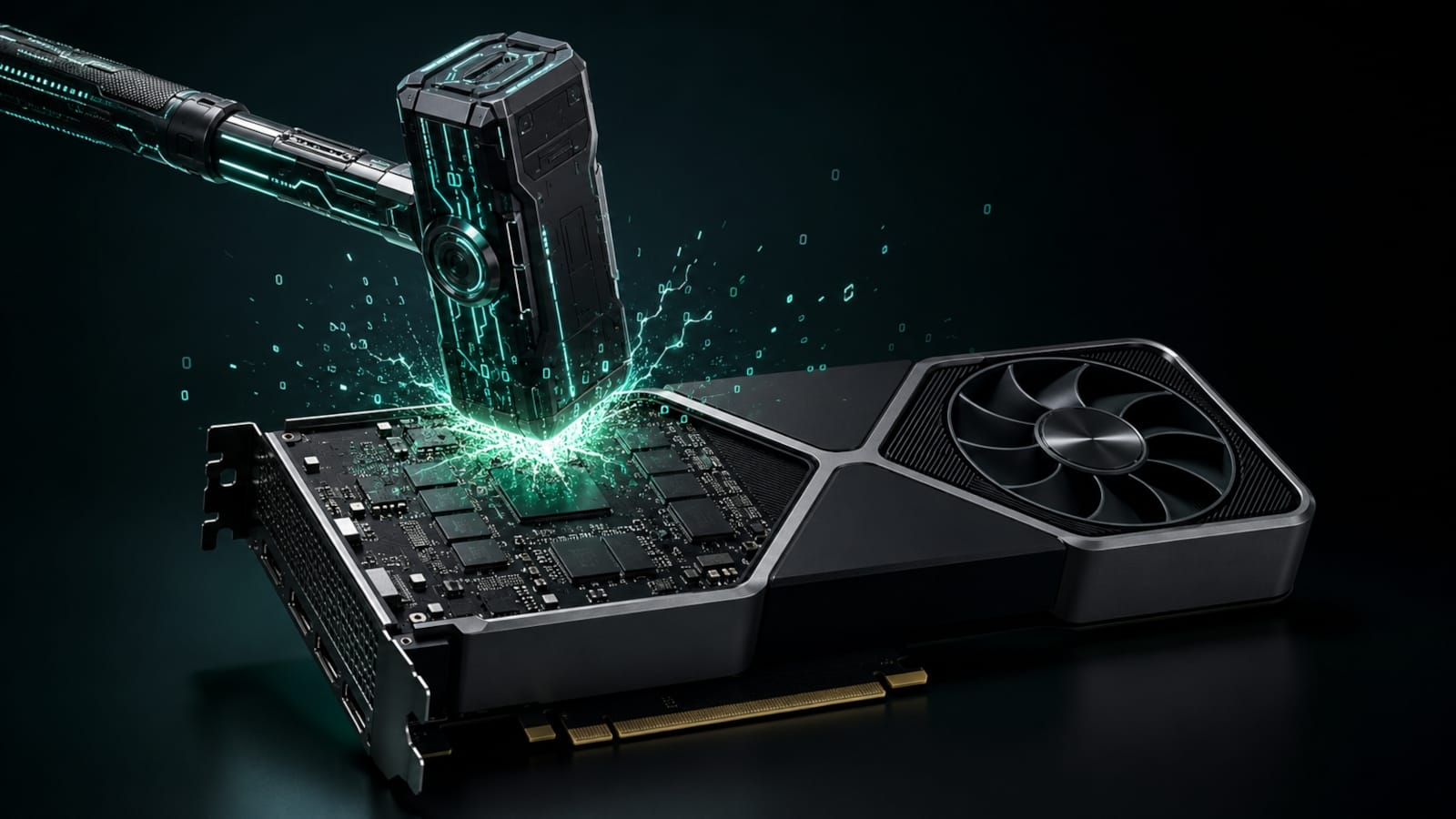
Researchers have disclosed a new Rowhammer attack, named GPUThor, that successfully bypasses error-correcting code (ECC) protections on NVIDIA GPUs. This technique enables both denial-of-service (DoS) and root-level privilege escalation, posing a significant threat to systems relying on NVIDIA graphics processing units for sensitive computations.
Rowhammer attacks exploit the physical properties of DRAM cells, causing bit flips in adjacent memory rows by repeatedly accessing a specific row. ECC is a common mitigation that detects and corrects such bit flips, but GPUThor demonstrates that ECC can be circumvented on NVIDIA GPUs, undermining a key security control.
The attack is particularly concerning in data centers and high-performance computing (HPC) environments where NVIDIA GPUs are widely used for AI, scientific simulations, and other critical workloads. A successful exploit could allow an attacker with local access to gain root privileges, potentially leading to full system compromise, data exfiltration, or persistent denial of service.
While the exact technical details of GPUThor are not fully disclosed in the available information, the research highlights the evolving sophistication of Rowhammer attacks and the need for robust hardware-level defenses. The attack does not require physical access to the device, but it does require the ability to execute code on the system, typically through a user-level process.
As of now, there is no evidence of active exploitation in the wild, but the proof-of-concept demonstrates a real and practical threat. Organizations using NVIDIA GPUs should monitor for updates from NVIDIA and consider additional mitigations to reduce the risk of Rowhammer attacks.
The disclosure of GPUThor underscores the importance of continuous security research into hardware vulnerabilities and the need for collaborative efforts between hardware vendors, researchers, and end-users to address such threats.
Security Details
The GPUThor attack exploits Rowhammer vulnerabilities in NVIDIA GPU memory, bypassing ECC to induce bit flips. This can lead to memory corruption, enabling denial-of-service or privilege escalation to root. The attack requires local code execution but no physical access, making it a viable threat in multi-user environments.
Affected products
NVIDIA GPUs
Mitigation
Organizations should apply any security patches or firmware updates provided by NVIDIA. Additionally, consider enabling stronger memory protections, monitoring for unusual GPU activity, and restricting local access to trusted users. For critical systems, evaluate the feasibility of using GPUs with enhanced ECC or alternative mitigations.
Sources
BleepingComputer
New GPUThor attack defeats NVIDIA ECC protection for root access
Aug 26, 2026 · 18:48
Original link
Related Security News
One Packet Can Crash OT Servers in Industrial Sectors
A high-severity zero-day vulnerability in the TDengine time-series database allows a single malformed packet to crash OT servers, potentially disrupting industrial, IoT, energy, and automotive operations. Details regarding exploitation status and remediation remain limited.

Google Patches Pixel Modem Flaw Amid Signs of Limited Targeted Exploitation
Google has disclosed and patched a high-severity privilege escalation vulnerability in the Pixel Cellular Modem, tracked as CVE-2026-58704 (CVSS 8.0). The flaw, a permission bypass due to a logic error, has been exploited in the wild in limited, targeted attacks. Users are urged to apply the September 2026 security update immediately.

